
First identify the surface
Confirm whether the concrete is a private walkway, a sidewalk in or near a public right-of-way, a porch approach, or part of another structure. Do not assume ownership or permit responsibility from appearance alone.
Document the edge without creating a hazard
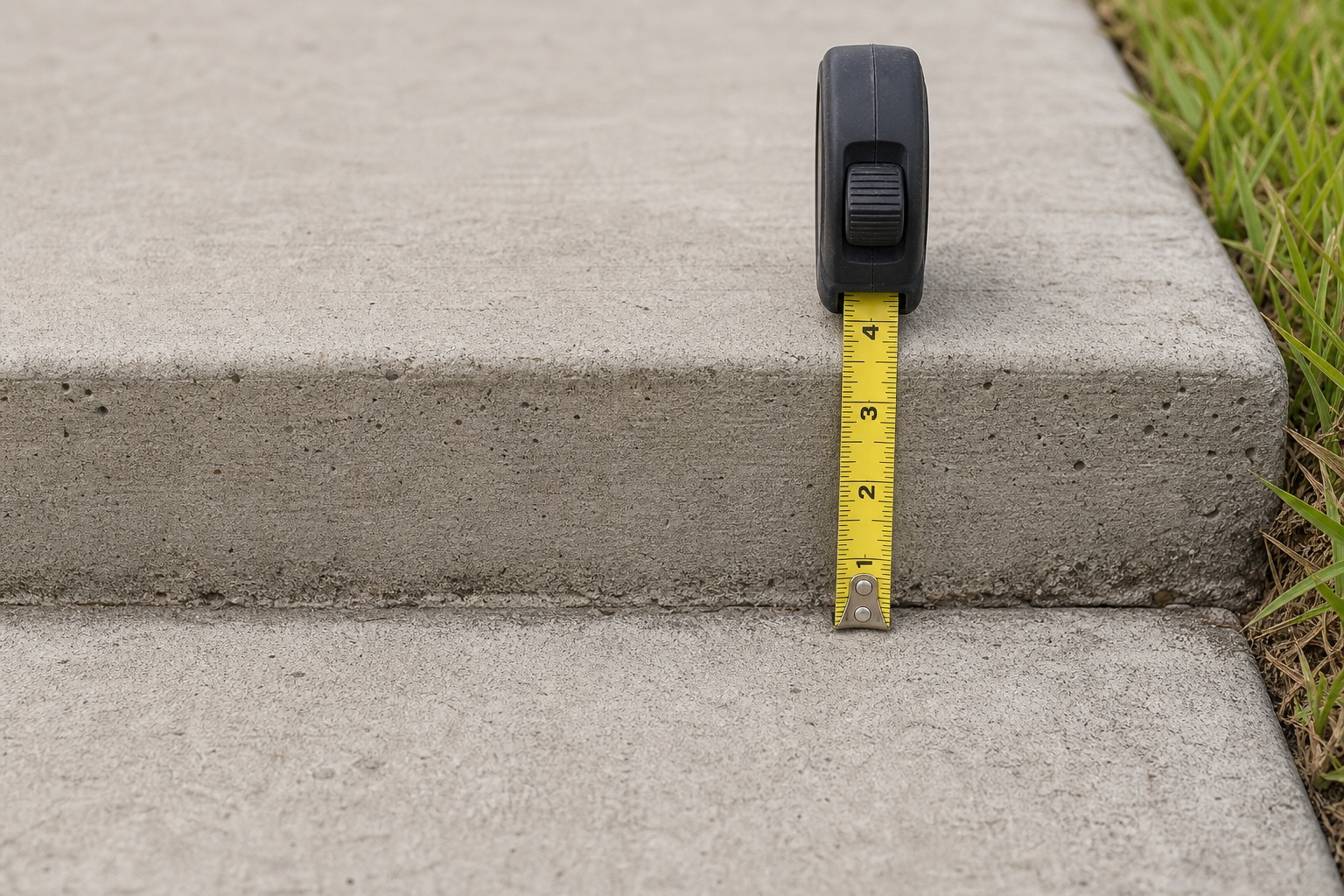
Use a ruler or tape in the photo if it can be placed safely. Show the approach from both directions, the full panel, nearby roots or drainage, and any joint or crack pattern.
- Do not stand in traffic or block a public route.
- Do not pull up a slab or probe below it.
- Keep the area visible while you seek an evaluation.
Ask what the repair would and would not change
A proposal should identify the panels, target transitions, holes or access needed, separate crack or joint work, and limitations. Severe deterioration or continued movement may call for another path.
Common questions
Questions worth asking
Who is responsible for a sidewalk?
Responsibility depends on location and jurisdiction. Confirm it with the relevant city, county, association, or property records before authorizing work.
Is grinding the same as leveling?
No. Grinding changes the surface at an edge; slab lifting changes elevation. The appropriate approach depends on the actual condition and scope.
Source shelf
Primary sources
Technical and local assertions on this page are bounded by these primary sources. Accessed July 30, 2026.
Slabjacking suitability, preparation, procedures, and repair limits.
Open official sourceOfficial county permit and licensing portal.
Open official sourceNext steps